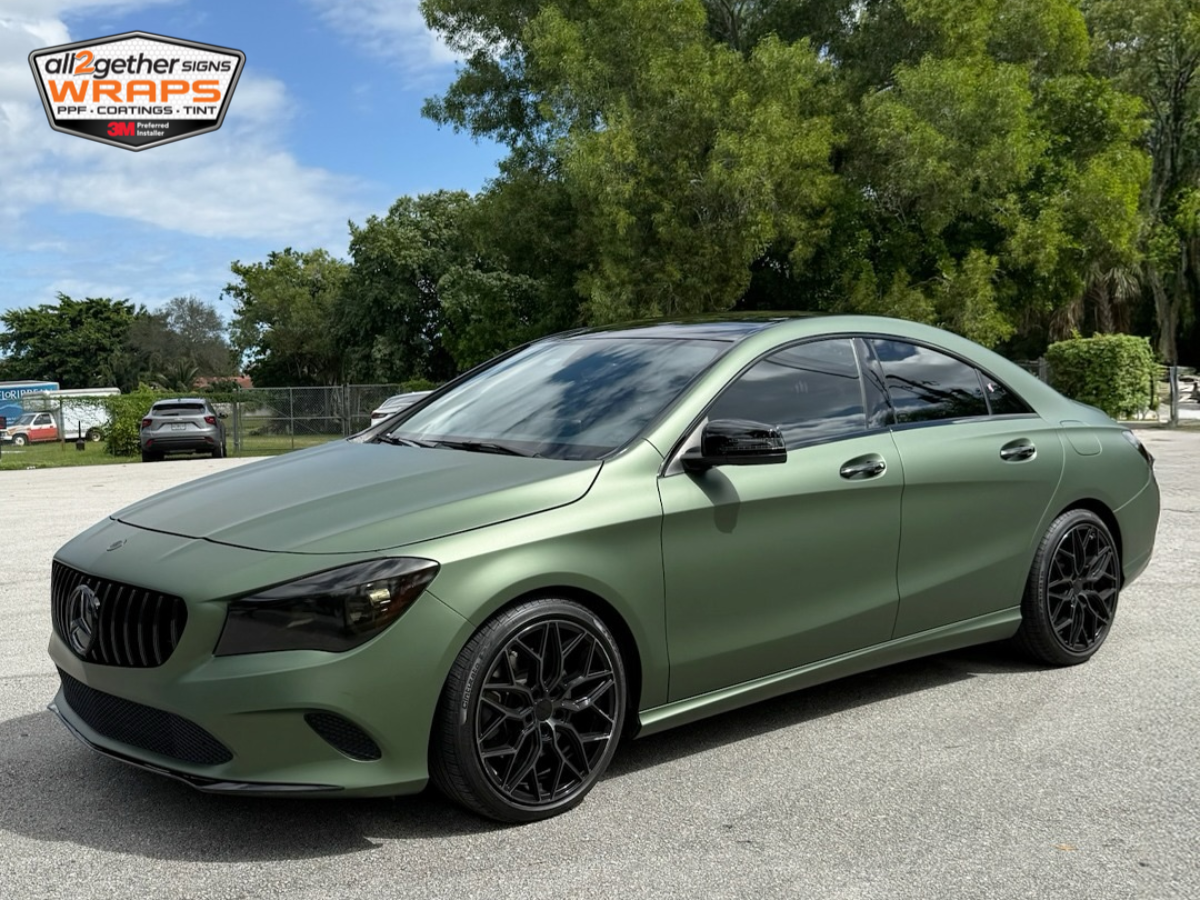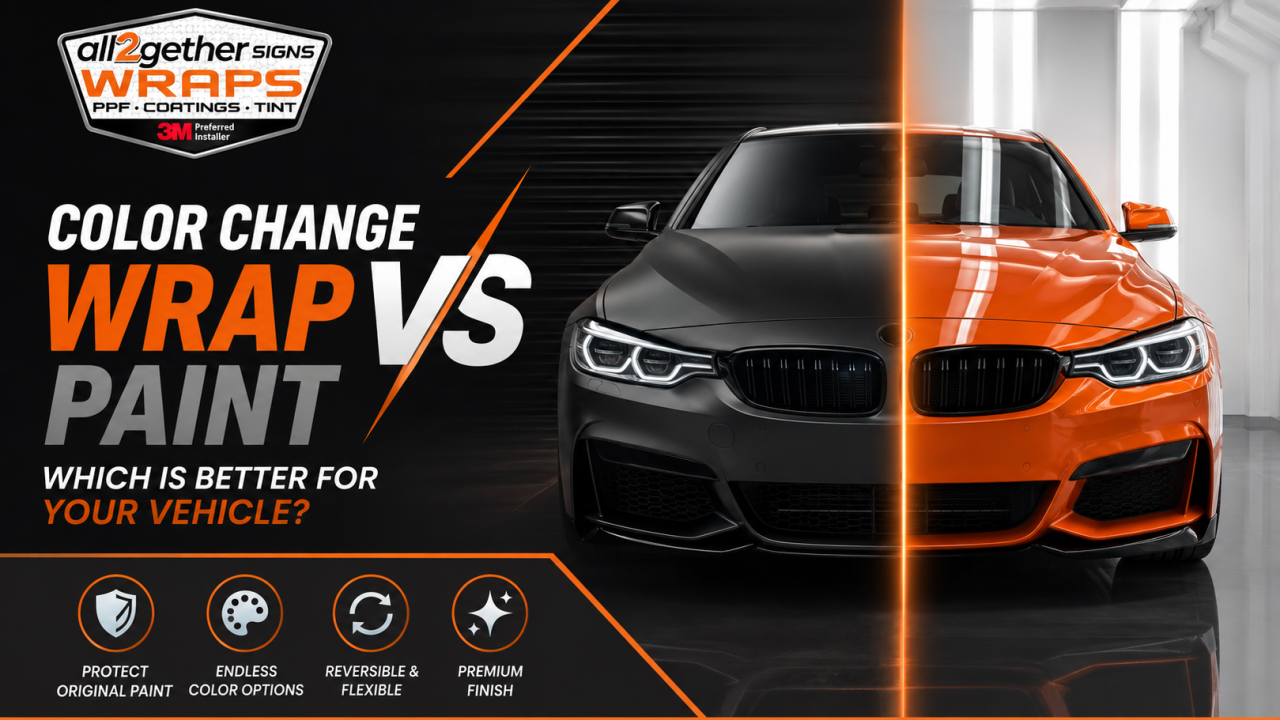
Want to change the color of your car without committing to a permanent paint job? A color change wrap can completely transform your vehicle while keeping the original paint underneath.
But how does a vinyl color change wrap compare with a traditional paint job?
Both options can give your vehicle a fresh appearance, but they work very differently. A wrap is removable, offers a huge selection of colors and finishes, and can help protect the factory paint. Paint is permanent and can provide a true refinished surface when properly prepared and applied.
If you’re deciding between a color change car wrap vs. paint, this guide will help you understand the differences in cost, appearance, protection, maintenance, durability, and long-term flexibility.
Color Change Wrap vs. Paint: Quick Answer
For most vehicle owners who want to change their car’s color without permanently altering the factory finish, a professional vinyl wrap is the more flexible choice.
A color change wrap is applied over the existing paint and can later be removed. It also gives you access to finishes such as matte, satin, gloss, metallic, chrome, and other specialty looks.
A paint job, on the other hand, becomes the vehicle’s new permanent finish. It can be the better choice when you need extensive bodywork or want a permanent color change.
The right option depends on what you want from the vehicle and how long you plan to keep the new appearance.
What Is a Color Change Wrap?
A color change wrap uses automotive-grade vinyl film applied over the vehicle’s existing painted surfaces.
Instead of repainting the body, a professional installer carefully prepares the vehicle and applies the vinyl to the panels. The film changes the visible color while leaving the original finish underneath.
This makes vinyl wrapping especially appealing if you want a dramatic transformation without permanently repainting your vehicle.
At All2Gether Wraps, color-changing wraps are part of our vehicle customization services, with options designed for personal vehicles as well as business and fleet applications. Our South Florida service pages emphasize premium materials, professional installation, and protection against the region’s heat and humidity.
Popular Color Change Wrap Finishes
One of the biggest advantages of vinyl is the variety of finishes available.
Depending on the film selected, you can choose from:
- Gloss
- Matte
- Satin
- Metallic
- Color-shift
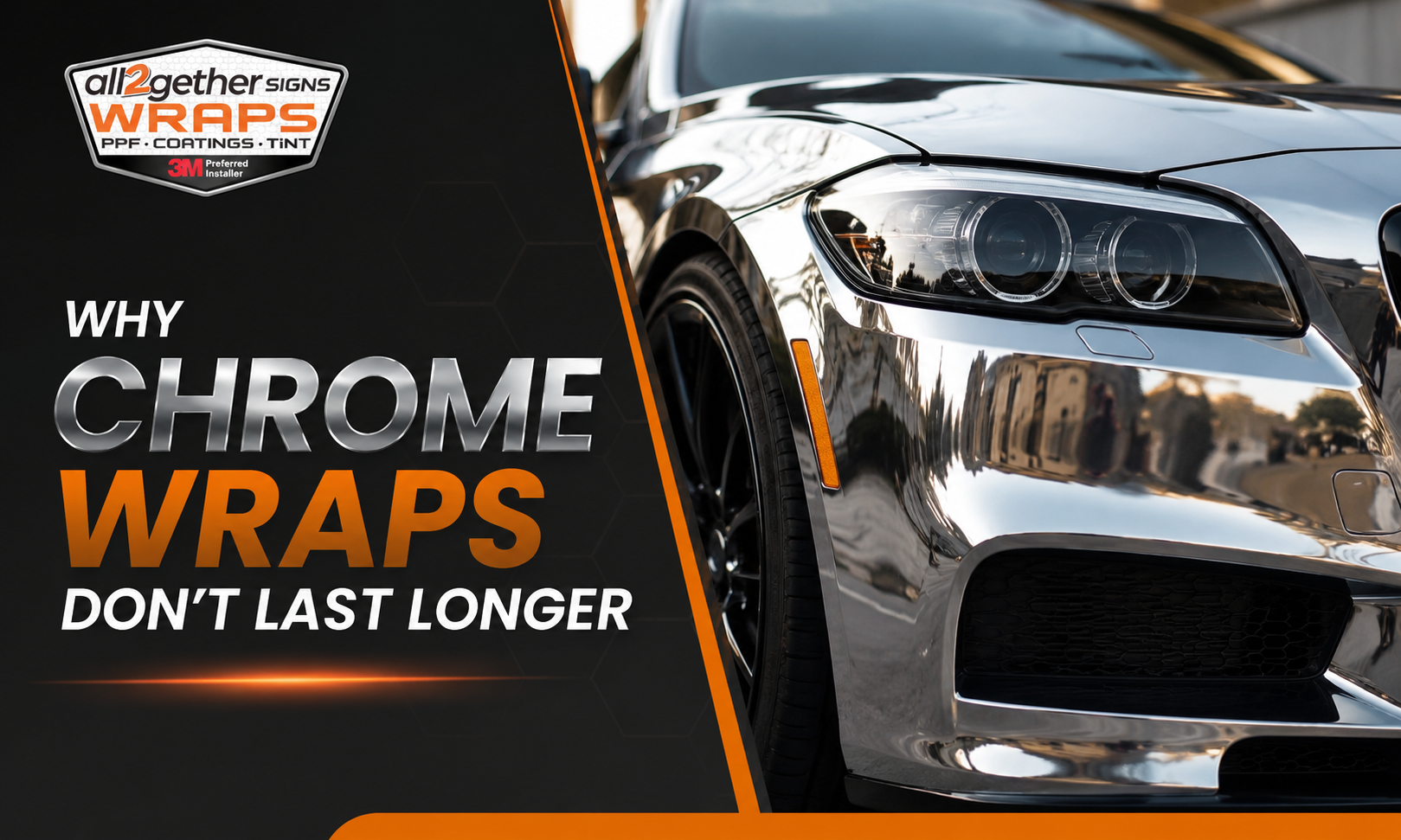
- Chrome
- Brushed or textured finishes
- Custom colors and specialty finishes
This gives vehicle owners considerably more freedom to experiment with appearance than a conventional color change would typically offer without additional custom paint work.
What Is a Traditional Car Paint Job?
A traditional paint job changes the actual finish of the vehicle.
The process can involve sanding, bodywork, primer, multiple coats of paint, clear coat, curing, and extensive preparation. The quality of the finished result depends heavily on surface preparation, paint products, application technique, and the skill of the body shop.
Unlike vinyl, paint is not designed to be removed when you want a different color.
If you decide to change the color again later, another paint process is required.
Color Change Wrap vs. Paint: Side-by-Side Comparison
| Feature | Color Change Wrap | Traditional Paint |
|---|---|---|
| Changes vehicle color | Yes | Yes |
| Reversible | Yes, when properly installed and removed | No |
| Protects original paint | Yes, to a degree | No — original finish is replaced |
| Finish choices | Very extensive | Extensive, but specialty finishes can cost more |
| Matte & satin options | Widely available | Requires specialty paint/coating |
| Color-shift options | Available | More complex and expensive |
| Installation time | Generally faster | Generally longer |
| Future color changes | Relatively easy | Requires another paint job |
| Factory paint preserved | Yes | No |
| Best for temporary customization | Excellent | Poor |
| Best for permanent refinishing | No | Yes |
| Custom business graphics | Excellent | Not practical |
| Bodywork capability | Limited by underlying surface | Excellent |
The biggest difference is simple: a wrap changes the appearance while keeping the original finish underneath, while paint permanently replaces the visible finish.
Color Change Wrap vs. Paint: Cost
Cost varies considerably depending on vehicle size, condition, material, finish, labor, and the quality of the installation.
A professional wrap and a professional paint job should not be compared with bargain-basement pricing. The preparation and workmanship behind the final result matter just as much as the material.
Current industry comparisons generally show that a quality full vehicle wrap can be less expensive than a high-quality professional repaint, although specialty vehicles, complex bodywork, and premium finishes can change the equation.
What Can Affect the Price of a Color Change Wrap?
Your quote may depend on:
- Vehicle size
- Number and complexity of body panels
- Existing paint condition
- Film brand and finish
- Door jamb coverage
- Removal of an existing wrap
- Mirrors, handles, trim, and other difficult areas
- Custom design requirements
That is why a professional shop should inspect the vehicle before providing a final price.
Which Looks Better: Wrap or Paint?
This comes down largely to personal preference and the quality of the work.
A properly installed premium vinyl wrap can create a clean, uniform appearance that dramatically changes the personality of a vehicle.
Paint has the advantage when you want a permanent refinished surface and specific paint characteristics. However, vinyl has made finishes such as matte, satin, color-shift, and specialty textures much easier to achieve.
For someone who wants a modern, aggressive, luxury, or completely different appearance, a color change wrap provides enormous creative flexibility.
Which Offers Better Paint Protection?
A color change wrap can provide a layer between the vehicle’s original paint and everyday environmental exposure.
It can help shield the underlying finish from UV exposure, minor abrasions, and normal road grime. However, vinyl wrap should not be treated as equivalent to dedicated paint protection film (PPF).
If maximum impact protection is your priority, PPF is specifically designed for that purpose.
All2Gether Wraps offers both vehicle wraps and PPF, allowing vehicle owners to choose a solution based on whether their primary goal is appearance, protection, or a combination of both.
Color Change Wrap vs. PPF
These services are often confused.
A color change vinyl wrap is primarily an appearance and customization solution.
PPF is primarily a protection solution designed to defend painted surfaces against rock chips, scratches, and road debris.
All2Gether Wraps’ PPF service uses self-healing film and is positioned as an invisible protective layer for the original paint.
If you want a new color and stronger protection, color PPF is another option worth discussing.
How Long Does a Color Change Wrap Last?
The lifespan of a wrap depends on the film, installation quality, exposure, maintenance, and environmental conditions.
Industry sources commonly place quality automotive vinyl in the multi-year range, with actual longevity varying by material, climate, care, and vehicle use.
South Florida drivers should pay particular attention to sun exposure, heat, humidity, washing habits, and how the vehicle is stored.
How to Make Your Wrap Last Longer
To protect your investment:
- Wash the vehicle regularly.
- Prefer hand washing or wrap-safe washing methods.
- Avoid aggressive brushes and harsh chemicals.
- Be careful when pressure washing around vinyl edges.
- Park in a garage or shaded area when possible.
- Clean contaminants such as bird droppings promptly.
- Follow the film manufacturer’s recommended care instructions.
Proper maintenance can help preserve the appearance and performance of the vinyl.
What Happens to the Original Paint Under a Wrap?
One of the biggest reasons people choose vinyl is the ability to keep the original paint underneath.
When the vehicle has healthy, properly prepared paint and the wrap is professionally installed and removed, the original finish can remain protected beneath the vinyl.
However, a wrap cannot hide every underlying problem. Peeling clear coat, severe oxidation, rust, damaged paint, or significant body defects may affect adhesion and the final appearance.
The condition of the vehicle before installation matters.
Is a Color Change Wrap Better for Resale Value?
It can be advantageous when preserving factory paint is important.
A wrap allows the vehicle owner to return the exterior to its original color later, assuming the underlying paint is suitable and the wrap has been properly maintained and removed.
That flexibility can be especially useful if you want a bold color today but may want the factory appearance back when selling the vehicle.
A permanent aftermarket paint color, by comparison, cannot simply be peeled away before resale.
When Should You Choose a Color Change Wrap?
A color change wrap may be the better choice if:
- You want to change your vehicle’s color without repainting it.
- You want to preserve the factory paint underneath.
- You like matte, satin, gloss, metallic, or specialty finishes.
- You may want a different color again in the future.
- You want a faster customization process than a major repaint.
- You are customizing a newer or luxury vehicle.
- You want a dramatic appearance change without permanent paintwork.
For style-focused vehicle owners, the biggest advantage is flexibility.
You aren’t locked into one color forever.
When Does Paint Make More Sense?
Paint may be the better option when:
- The vehicle requires significant bodywork.
- The existing paint is severely damaged.
- You want a truly permanent color change.
- You are restoring a vehicle.
- You want the paint process to address body imperfections.
- You plan to keep the same finish for the long term.
Paint is a legitimate choice. It simply serves a different purpose.
What About a Color Change Wrap on a Business Vehicle?
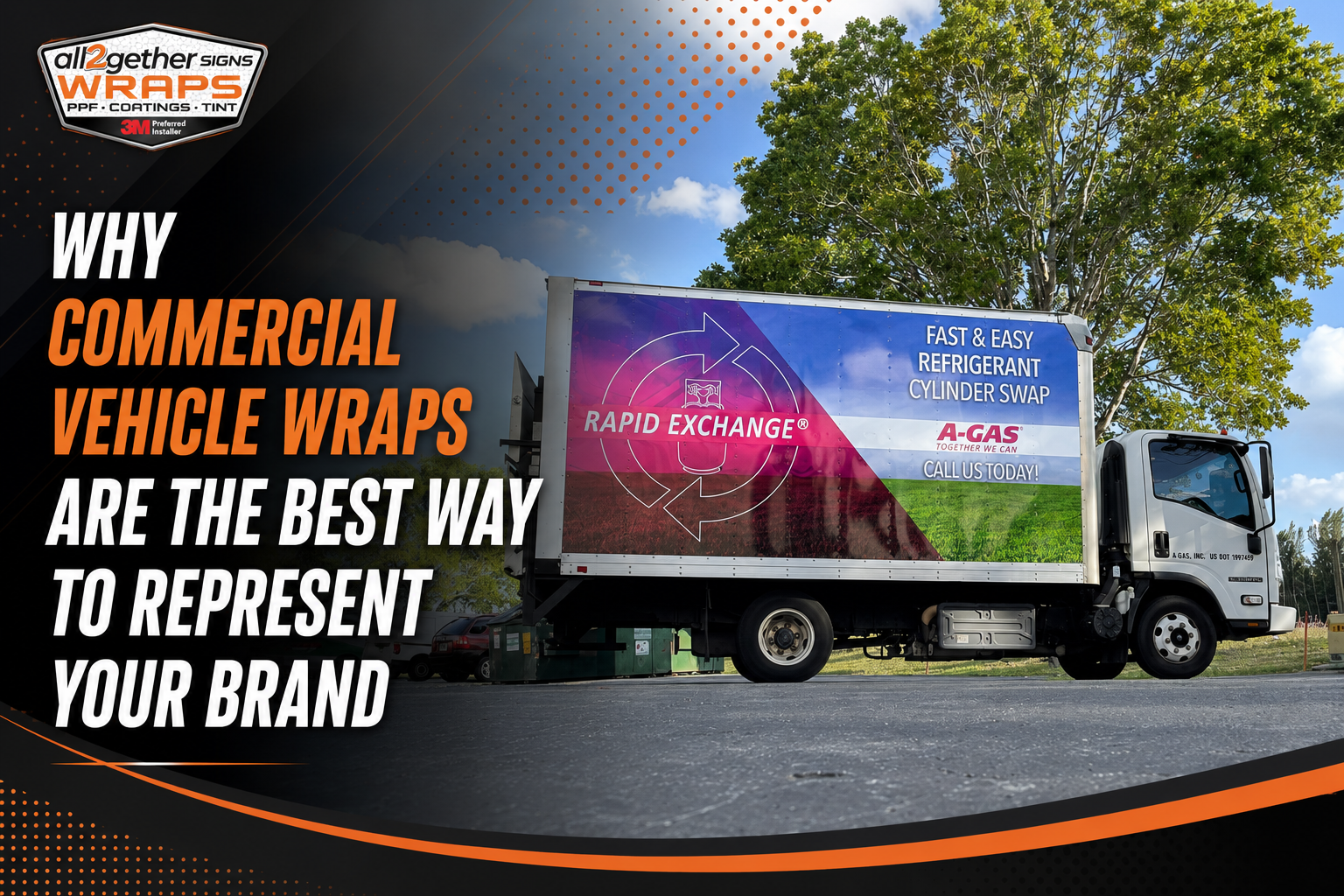
For commercial vehicles, wrapping has another major advantage: branding flexibility.
A business vehicle can be transformed into a mobile advertisement with a custom design, logo, colors, contact information, services, and other brand elements.
If your branding changes later, the vehicle can be updated without repainting the entire vehicle.
All2Gether Wraps provides commercial wraps, fleet graphics, custom vehicle branding, and in-house design and printing, making vinyl particularly useful for businesses that want their vehicles to support their marketing strategy.
Color Change Wrap vs. Paint: Which One Should You Choose?
Here’s the simple way to look at it:
Choose a color change wrap if you want flexibility, customization, specialty finishes, and the ability to return to the original color later.
Choose paint if you want a permanent finish or your vehicle requires substantial body and paint restoration.
For many South Florida vehicle owners who simply want a completely different look, a professionally installed color change wrap offers an excellent balance between appearance, flexibility, and protection.
Frequently Asked Questions
Is a color change wrap better than painting a car?
For many customization projects, yes. A color change wrap is reversible, offers a wide variety of finishes, and can preserve the factory paint underneath. Paint is better when you want a permanent finish or need extensive bodywork.
Does a car wrap damage the original paint?
A professionally installed and properly removed wrap generally should not damage healthy factory paint. However, existing damaged, peeling, or poorly repaired paint can create complications.
Can I change my car back to its original color after wrapping?
Yes. One of the primary benefits of vinyl wrapping is that the film can be professionally removed, allowing the original paint color to be revealed again.
Is a wrap cheaper than a paint job?
A professional wrap is often less expensive than a high-quality full repaint, but the actual price depends on the vehicle, film, finish, condition, and installation requirements.
How long does a color change wrap last?
A quality wrap can provide several years of service, but lifespan varies based on film quality, installation, maintenance, sun exposure, and environmental conditions.
Can I wrap a car with damaged paint?
It depends on the damage. Minor imperfections may sometimes be manageable, but peeling clear coat, rust, loose paint, or significant body damage should be addressed before wrapping.
Does a color change wrap protect my car?
A vinyl wrap provides a layer of protection against some everyday environmental exposure and minor abrasions, but it is not a substitute for dedicated PPF when impact protection is the main goal.
Can I get a matte or satin color change without painting?
Yes. Matte and satin vinyl films are widely available and are among the most popular options for modern color-change projects.
Can I combine a wrap with ceramic coating?
Yes, depending on the film manufacturer’s recommendations and the coating being used. All2Gether Wraps also offers ceramic coating services for vehicle protection and easier maintenance.
Final Thoughts
A vehicle color change doesn’t have to mean committing to a permanent paint job.
A professional color change wrap gives you the freedom to completely transform your vehicle while maintaining the option to change the look again later. With gloss, matte, satin, metallic, and specialty finishes available, vinyl provides an impressive amount of creative freedom.
Paint remains the right choice for permanent refinishing and major bodywork, but if your priority is style, flexibility, and preserving the original finish, a quality color change wrap is worth considering.
At All2Gether Wraps, we help South Florida drivers choose the right solution for their vehicle, whether that’s a custom color change wrap, commercial vehicle wrap, PPF, ceramic coating, or window tinting.
Ready to Change Your Vehicle’s Color?
If you’re considering a color change wrap in South Florida, have your vehicle evaluated by a professional installer before choosing your film and finish. The right material, preparation, and installation can make a major difference in the final result.